

solar panels on the roof of a new build house

David’s solar double, and a battery first!


Just over two years ago, David contacted us to install solar on his London home. When the time came for him to sell up and make the move north, there was only one company he was going to call again… us!

We were delighted David came back to Joju, and only too pleased to help him with the design and install for his new northern pad.


First time round


Chatting about his first Joju install in London, David says:

“When I had panels installed, I did my homework. Joju had a very good report on Which and installing solar on my two up two down in Dagenham was the best thing I ever did. As batteries were subject to VAT then and my usage was low as a single occupier, I didn’t go with a battery at that time and that was the advice of the Joju surveyor.

I did benefit greatly from what I was generating during the day. I got my electricity bills down to an average of £12 a month (excluding the Standing Charge), and over the 2 years I made £1,000 under the Smart Export Guarantee (SEG) scheme. When I deducted what I paid in electricity from what I got in income, I was about £540 up and when I was selling the house, the people who bought it were very keen on this, and all the background data I had”.


New beginnings, solar, and a Sigenstor first!


Having already had solar panels in London, David definitely wanted to have them in his new home. As he says,

“My first, very positive experience with Joju made them my first choice to advise on, plan and install the system.

I do have a very strong view about climate change and looking forward, so in a sense money wasn’t the major driver for me this time round. It’s interesting to know the return you’re getting and how long it will take to recoup the costs, but I paid for it with the proceeds of the sale of my old house, so in a sense I’m very lucky that those calculations aren’t a huge issue for me.

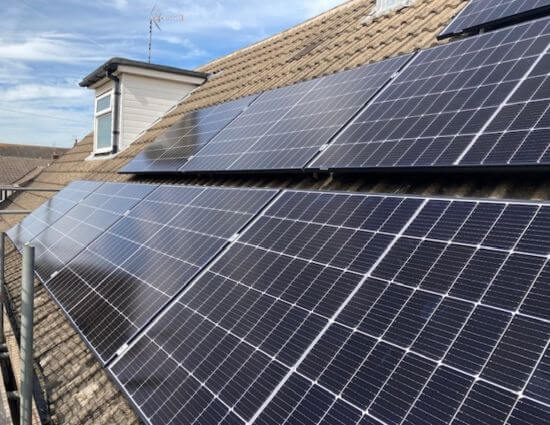
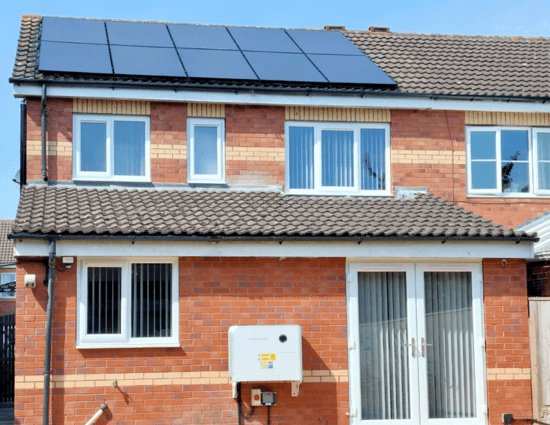
 Dan from Joju came to look at the house and we discussed what I wanted… to maximise the potential of the system. My new house faces east-west, the same as my London house did, and I wanted panels on the front and the back again. Dan said I could have up to 10 panels on each side, so we went for 20 in total. We talked about the kind of panels, and Dan recommended a panel made in Spain which was very highly rated in terms of efficiency. It was also a lot more cost effective this time.

We discussed a battery as the VAT has been removed, the technology has improved, and the overall costs have fallen since the last install. I was keen to explore alternatives to the market leader and so I became one of the first Joju installs of the Sigenstor battery. I was happy to go for it, and the unit cost of the battery was very reasonable. In terms of value for money, it was very competitive indeed”.


Installing the system


When the installation team got to work, David says:

“The team were very considerate and efficient. I was also able to liaise with a project co-ordinator who took personal responsibility for the management of the installation from beginning to end. The installation team fulfilled all their obligations in relation to time, the quality of the workmanship was excellent, and any questions I had were answered both courteously and in detail.
They did an excellent job and the installation was absolutely trouble-free. I did also stock up the fridge with red bull for the install team!”

Of course, the team will always appreciate that! Thank you David.


System performance


When it comes to the system performance so far, again David is all smiles. He tells us that the Sigenergy app is easy to use and that there are already some very positive stats to share.

“Since the system has been commissioned, I’ve been entirely energy self-sufficient. The best day so far was August 10th. The panels were at a maximum efficiency of 97.13% which was very good, and the battery was fully charged to 8.05 kWh.

The stats show that the system generated 47.23 kWh of energy that day, of which 42.6kWh was exported to the grid. Total consumption was 4.62kWh so 1.39kWh came from the battery and the balance from the panels. 1.41 kWh went to charging the battery. I’m in the process of registering with Octopus and on my calculations, I would have been given anywhere between 4p per unit to 15p per unit depending on demand. I use quite a lot of appliances and the system comfortably supplies enough energy for them – even the kettle, microwave and hob together!”

Now that’s a great outcome!

As David says, it’s too early to predict an average return for a year, but on present performance he anticipates being self-sufficient throughout the annual cycle.


Would David recommend us?


“Oh absolutely”, says David.  “In fact, I’ve already done it with my friends and family on Facebook”!

That is music to our ears, especially when David shares his reasons.

“The service, the quality of the workmanship, the attention to my own views, and the overall return from the system. There isn’t anything I would change or criticise. The new technology is paying dividends already, so I’m very very happy”.

We’re only ever as happy as our customers are, so it’s great to hear that David’s solar and Sigenstor system is working wonders.


System details


  • 10 kWp PV
  • 20 x Eurener 500 W panels evenly spread across two roofs (east-west)
  • Bird protection
  • Sigenergy Sigenstor system
  • Sigenergy gateway provides home backup functionality
  • 8 kW Sigenergy Energy Controller (inverter)
  • 8 kWh Sigenergy battery


Further information


For more about the Sigenstor battery, take a listen to Dan sharing the features and benefits.

To discuss solar and battery storage for your home, please get in touch.

For more case studies, head here.

More power to Oxford Brookes!


Highlights

  • Solar installed on 10 Oxford Brookes university buildings
  • The systems total 847.79 kWp
  • That’s almost 2,000 solar panels
  • Together, the installations will generate 720,055 kWh’s every year
  • They will save just short of 169 tonnes of CO2 per annum


Background

Oxford Brookes declared a Climate Emergency in 2021 and by 2040, they intend to become a net-zero carbon organisation, where only unavoidable emissions are offset.

We’ve been working with the University over a number of years to help them achieve their ambition.

In November 2020, we installed solar on the Buckley Building, John Payne Building, Lloyd Building, Sinclair Building and the International Centre. That was approx. 300 kWp, and it doubled their solar PV capacity at the time, generating 224,912kWh per year, with a saving of 57 tonnes of CO2. You can read more about it, here.

We haven’t stopped there, though!

As part of their new strategy, Oxford Brookes has been dramatically increasing the amount of renewable energy it generates in recent years. We’ve been excited to help, every step of the way.


The latest installations

In the first quarter of 2024, we installed solar in three other areas at the University:

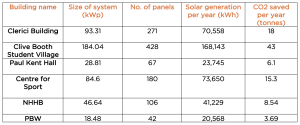
The Clerici Building (housing the Oxford Brookes Business School), Clive Booth Student Village (the biggest accommodation site for Oxford Brookes students), and Paul Kent Hall (241 study bedrooms in flats of 5 to 12).

In the Summer of 2024, we also installed solar on the Centre for Sport, the NHHB Building (at the Headington Hill Campus, a new facility designed to house the Faculty of Technology, Design and Environment) and the PWB/workshop building (providing industry-standard technical facilities for students, staff, and researchers, including specialist engineering equipment, labs, and hands-on teaching spaces).


The facts and figures

Here’s how it all breaks down, in terms of the solar we’ve installed and the savings:


And there’s more

In summer 2025, we’re installing a 91.91kWp solar system on the Joel Joffe Building, where the Faculty of Health & Life Sciences is housed. A SolarEdge system with 202 panels is incoming! It’s estimated to generate 97,250 kWh and save 16.7 tonnes of CO2.


Reaction

The Carbon Reduction Manager at Oxford Brookes, Paul Spencer, has this to say about working with us:

“Oxford Brookes University has worked successfully with Joju on a number of large scale commercial Solar PV installation projects on its campus buildings over the past few years. The team at Joju have helped us on our way to meeting our Net Zero goals by working sensitively within a live environment, with students, staff and students in halls. They are always responsive to our needs and are always willing to go the extra mile in tackling and responding to any problems that may arise”.

As Paul says, our Joju team will always go the extra mile (in a sustainable way of course!) and the university is clearly determined to achieve its Net Zero ambitions.

We say more power to you, Oxford Brookes… in both senses!


Discover more

Roof with solar panels on

Bringing solar power to Latcham


Key highlights

  • A 567 kWp system with 1,276 panels
  • Generating 465,000 kWh every year
  • Saving 96 tonnes of CO2 annually

‘Businesses expend more energy than an individual, so they have to take the lead in tackling the climate crisis’, says Latcham’s Managing Director, Mike Hughes. Data, print, digital and fulfilment specialists, Latcham, are certainly doing that with their commitment to a sustainable approach.


Making sustainable change

Latcham has aligned its green goals with Bristol City Council, to be carbon neutral by 2030. To achieve their ambitions, Latcham is making a number of changes to the way they do business. These include recycling 94% of all waste materials to date, insulating walls, replacing windows, upgrading their print facility, installing EV charge points, and partnering with the Bristol charity, Tree Aid.

When they decided that solar energy would be part of this change, we were delighted to work with the Bristol Energy Cooperative to make it happen. Bristol Energy Cooperative offer free solar PV for businesses, schools and community organisations across Bristol, partnering with sites in or around the city which have large roofs and use lots of electricity.


Let’s go solar!

Latcham’s Bristol head office is a fantastic site to work on with its large, well-appointed roof. The initial challenge was maximising the number of panels on the main roof, and we did that with a combination of landscape and portrait design, to get as much on as possible. We also had to make sure the panels would be accessible for maintenance and cleaning, so that influenced our thinking.


The kit

We installed a 567 kWp system with 1,276 JA Solar fully traceable 445w panels. The system is connected to four 100 kW Solis inverters, which are mounted on a custom-built inverter frame.

The solar is predicted to generate 465,000 kWh every year, saving 96 tonnes of CO2 annually.


The dream

Latcham says that when it comes to the communications they create, “green is our dream”. We are so pleased to have helped them on the way to achieving this dream, in partnership with the brilliant Bristol Energy Cooperative.


Discover more

Read more about the solar we installed on the Castle Climbing Centre

Find out more about the award-winning solar we’ve installed on schools and community buildings in North Lincolnshire

Discover more about how we work with businesses to help them go solar

Read more about how we are involved in Community energy


King of the Castle – Castle Climbing Centre goes solar


Project highlights 

  • Solar array designed and installed on one of the most unique climbing centres in the world
  • 31.15kWp system
  • Generating 27,313kWh every year
  • Saving 5.66 tonnes of CO2 annually


Background

Housed within a former Victorian water pumping station in London, the Castle Climbing Centre offers climbing for people of all abilities…  from absolute beginners to those at the top of their game.

Talking of the top, our interest was in the roof! Our team was tasked with designing and installing a rooftop solar PV system to cut carbon, help reduce energy bills, and deliver greater energy independence. The aim was to power the majority of the business through solar energy, in keeping with the Castle’s goal of become a net-zero business. As they say:

“Sustainability is in our DNA. Our planet is precious, and as climbers we have a duty to protect it”. 


The building

Well, it’s not every day you install solar on a former Victorian water pumping station! Dating from the 1850s, it’s a grade II* listed building too.

We’re highly experienced in installing solar on heritage buildings (our award-winning install on Salisbury Cathedral is one to check out), so we relished the opportunity.


The challenges

Our challenges involved meeting the energy demands of the building, designing around shading of the array, and the system being visually in keeping with the building aesthetics. On top of that, we had an interesting, pitched roof construction to contend with.

We used Nicholson roof products to provide a strong, completely watertight fixing point to build the system up from. A Renusol VarioSole+ rail system was incorporated and we installed 70 JA Solar 445W panels.


The results

The system is predicted to generate 27,313kWh per year, with an annual carbon saving of 5.66 tonnes. Plus, the solar looks totally at home up on the historic roof. It’s the perfect addition to compliment their innovative ventilation system, 1.4 hectare organic permaculture garden, and a building that has been using 100% green energy since 2018.

We’ve loved helping the Castle Climbing Centre on their way to becoming a net-zero business and reach even greater heights when it comes to sustainability.


Discover more

Read more of our commercial solar case studies

Discover how we can help businesses with solar, battery storage, and EV charging infrastructure

Contact us to discuss your project. We’d love to help you.

Henry’s solar bungalow

Henry was an earlier adopter of solar decades ago, when he lived in Scotland. He wholeheartedly believes in the ability of solar power to change the way we generate electricity. So, when he moved to Leicestershire in 2021 to be nearer to his family, there was no way his new home would be driven by anything other than clean energy he could largely generate himself.


Henry’s solar story

Henry’s son-in-law had chosen our Joju team to install solar on his own home.  Henry followed his recommendation, arranging a site survey with us. When our designer Dan visited, we considered the roof layout, the amount Henry needed to generate, and what would work best for his unique set of circumstances.

We installed 10 Canadian Solar 410 W panels, alongside a SolarEdge 3.5 kW HD-Wave Inverter with panel optimisers.


The results

Henry is delighted with his installation and the way it performs. It even had British Gas scratching their heads and reimbursing him £400 after the Spring and Summer months, when Henry largely generates all the energy he uses from his solar!


Listen to Henry’s thoughts on his solar installation

Have a listen to Henry talking about how he found the experience of getting solar installed with Joju Solar here.

If you would like to turn your home into a solar powerhouse, just contact us for a chat and over 18 years worth of energy expertise. We would love to help.


Further reading

Deerhurst Care Home – Powering care 24/7


Project Highlights

  • Saving Deerhurst Care Home £9,200 a year on their energy bills
  • 100.57 kWp installed
  • 226 JA Solar 445W modules and a fully optimised SolarEdge system
  • Estimated annual generation of 84,865 kWh
  • Estimated carbon saving of 17.57 tonnes per year
  • Three more rooftop arrays to come on other Brunelcare buildings.


Background

Deerhurst Care Home is an award-winning facility, providing the highest levels of nursing and dementia care for its 66 live-in residents and ten day-care residents.

As well as nursing, Deerhurst also provides entertainment for residents including musical performances, an art club, toddler group, and many other events.


Powering care 24/7

Care of this kind requires significant electricity, with a TV and nurse call system in each room, building lifts and charging for laptops and other equipment, so we were delighted to have the opportunity to design and install solar for Deerhurst, working with Bristol Energy Co-operative and Brunelcare.


The kit

We’ve installed a 100.57kWp system, including 226 JA Solar 445W modules and a fully optimised SolarEdge system. As well as a best-in-class warranty and high efficiency panels, JA Solar have a comprehensive badged, integrated, traceable system, recognising the importance of a responsible supply chain, so their panels were the perfect choice.


Generation and savings

Our estimated annual generation is 84,865.08kWh and the installation will provide an estimated carbon saving of 17.57 tonnes per year.

All power from the panels will help to run the building, providing energy bill savings of around £9,200 per year. Any excess will be exported to the grid.


Reaction

Site Manager, Lesley Hobbs, commented: “I didn’t know about community energy until work started here. I didn’t know that the solar panels were benefiting the community. It’s great that we’re having things that are going to improve the environment too.”

Joju Solar’s Project Manager, Oliver Sadowski, said: It’s been fantastic working with Bristol Energy Co-operative and Brunelcare to bring solar to Deerhurst Care Home. We look forward to seeing the difference it will make to their energy bills, as well as reducing carbon. We’re looking forward to getting started on future installations on other Brunelcare buildings too”.


Future plans

Three more rooftop solar arrays are planned on Brunelcare buildings, with the four sites totalling a combined 543 kWp.

The projects are part of Bristol Energy Cooperative’s South West Local Solar Scheme, which aims to install 2 megawatts of rooftop solar capacity across the West of England by 2025. The scheme is funded through a £500,000 grant from the West of England Mayoral Combined Authority’s Green Recovery Fund.


Further reading

Solar and Storage at the University of Wales Trinity St David

The University of Wales Trinity Saint David (UWTSD) declared a climate emergency in 2019 and is dedicated to creating a community which supports sustainability through social, economic, cultural, and environmental responsibility.

Sustainable development is one of the University’s values, with staff and students working together to have “a positive impact on people, communities and the planet”. This multi-campus centre of learning holds Level 5 of the Green Dragon Environmental Standard and there has also been significant financial investment in solar and storage so the University can generate its own clean, green energy. To this end, Joju Solar has been working on bringing solar and battery storage to two buildings on the Swansea campus, changing the way the buildings generate and store power.

It takes two…

On the College of Art’s Dynevor building, at the heart of the city’s arts quarter, we’ve installed a 130kWh Pixii battery alongside 150 kWp of PV, using Canadian Solar 380Wp panels and a Solis inverter.

We’ve also installed a 42kWh Victron battery with 80 kWp of solar on the Technium 2 building at the Swansea campus. Again, we used Canadian Solar 380Wp panels and a Solis inverter.

In terms of selecting the kit, half hourly data was used to specify batteries that best matched the excess generation of the PV systems. The panels and inverters were chosen based on a mix of quality and cost.

Battery benefits

The solar PV generates electricity which can either be used immediately, or stored in the battery for when the buildings need it the most. There’s a mixed level of demand in both buildings as being a base of education, the buildings aren’t as well-populated over the weekend. It therefore makes sense to store the self-generated energy during those periods for use when footfall is greater.

Savings to celebrate

The systems will contribute Co2 savings of approximately 41.5 tonnes a year, supporting the University’s climate commitments. There will also be significant financial savings across both buildings. These are estimated at around £37,000 a year on the basis of a 22p per unit electricity price and the systems generating around 200,000 kwh a year with the batteries using 85% of that.

And there’s more…

We’ve also installed 22.8kWp of solar on a third building, Technium 1. With sixty 380Wp panels and a Solis inverter, the system is estimated to save 4.44 tonnes of Co2 a year. .

 Ed Baughan, Joju’s Head of Commercial Solar said:

“Our team is delighted to work with UWTSD to help them realise their sustainability ambitions. At the heart of everything we do is our mission of cutting carbon, so it’s great to install the technology that helps the university reduce its carbon footprint and create greater energy self-sufficiency, whilst making financial savings too”.   

A sustainability hero

 When it comes to its students, UWTSD encourages everyone to “Become the hero of your own story” by “creating the education experience you’ve always wanted”. By making a real commitment to cutting carbon, the university is becoming the hero of its own sustainability story too – taking positive strides towards a green future and leading by example.

Joju is proud to be working with UWTSD and we relish the supporting role we’re able to play in their story of environmental responsibility.

Further reading

Oxfordshire solar and storage decarbonisation

Oxfordshire’s carbon-cutting nine

The Public Sector Decarbonisation Scheme provides grants for public sector bodies to fund heat decarbonisation and energy efficiency measures. It’s designed to encourage green investment and support clean growth goals, alongside thousands of jobs in the low carbon and energy efficiency sectors.

As part of the scheme, Oxfordshire County Council secured grant funding and engaged Ameresco to carry out an assessment on a selection of council assets – looking at how to improve energy efficiency. Part of the assessment included the design and installation of renewables, and we were subsequently approached back in 2021 to help nine sites reduce their carbon footprint and become more energy self-sufficient.

Making a difference across a mix of sites

The nine sites our Joju Solar team worked on across the county included two fire stations, five schools, and two community centres. The focus was on cutting carbon by generating solar energy, as well as giving the sites the option to store any excess power in a battery. This way, the power could be used when the sites needed it the most and to help avoid any potential power cuts. We installed 245kWp of solar in total, and also fitted a Tesla Powerwall at every site, with the Abbey Centre doubling up on its battery power.

Nine times the carbon savings!

Since the installation, the sites have been saving approximately 43,107 KG of Co2 per year, contributing to the ongoing decarbonisation of the county, and helping to power the buildings with self-generated energy from the sun.

We thrive on supporting communities to generate and manage their own energy by ‘just adding sunshine’, and it was a pleasure to assist Oxfordshire County Council in meeting their ongoing sustainability ambitions.

Further reading

Find out more about how we work with the public sector. 

Read about our solar panels for schools projects.

Check out our solar and battery storage installations on the University of Wales Trinity St David.


Beautiful and powerful – Mike’s new build home

Our customer, Mike, originally contacted us with architects plans for a new build house. He wanted the house to be highly energy efficient… generating its own power without this negatively impacting on the character and aesthetic of his soon-to-be-built home.

Back to black 

We loved working with Mike to bring this vision to life and as solar tiles weren’t widely available at the time of install, and there were technical constraints with the products too, we specified all black solar panels built into the roof.

The all black panels have a black frame, black mono crystalline cells, and a black back-sheet with a neat finish, blending particularly well with dark slate and whilst there is a slight additional cost when compared to traditional on-roof solar, savings are made by not having to install slates and tiles where the panels are located.

We worked with Mike’s main contractor and roofer to complete this solar installation and in terms of the look for Mike’s new home, the panels worked perfectly.

As Mike says,

“We selected the black panels largely for the aesthetics and, given that we were building a new house, it made no sense to put a roof covering on and then put the panels on top… may as well make the panels be the roof covering. It integrates with the house much better”.

Never a truer word, we say!

Panel power

Well, the aesthetic is certainly attractive, but what about the solar generation?

As Mike tells us,

“We can get over 30kWh on really sunny days.  In 2021 to date, we have had 3253hWh. We have battery storage now too and our electricity bill is less than £50 per month, which isn’t bad for an electric only house and two electric cars”.

Not bad indeed!

A great experience

Here’s to architecture that not only looks beautiful, but that also definitely generates the power and here’s to a great solar installation experience all round. Jon, our Head of Residential Solar, led the project and as Mike says,

“It was a really good experience, easy, and Jon was great. He did what he said, when he said he would”.

We can’t say fairer than that!

Find out more

Check out some of our other residential case studies here

Discover how to get the most from your solar

What’s the best solar panel? Here’s our view